
Contents
Customer journeys are never as simple as going from A to B. When it comes to B2B purchase decisions, it can look more like A to C, then a pit-stop at X, than R. With so many stakeholders invested in purchase decisions such as gatekeepers, end users and the all-important decision maker, how can you efficiently attribute conversions? And more importantly, how can you accurately connect those touchpoints to pipeline, revenue, and return on investment?
Multi-touch marketing attribution can help. By implementing the right attribution model and B2B marketing attribution software for your business, you can easily track the most valuable touchpoints, optimise your budgets based on real customer data, and scale your business profitably and effectively. Modern attribution platforms also help marketers improve lead quality, reduce wasted spend, and optimise campaigns using richer first-party conversion signals.
In the blog, we’ve put together the ultimate guide to B2B marketing attribution, answering all your burning questions. From what is marketing attribution right through to how using it correctly can enhance your B2B marketing campaigns. We’ll also explore how AI-powered attribution, call tracking, and first-party conversation data are helping marketers improve campaign performance and prove marketing ROI more accurately than ever before.
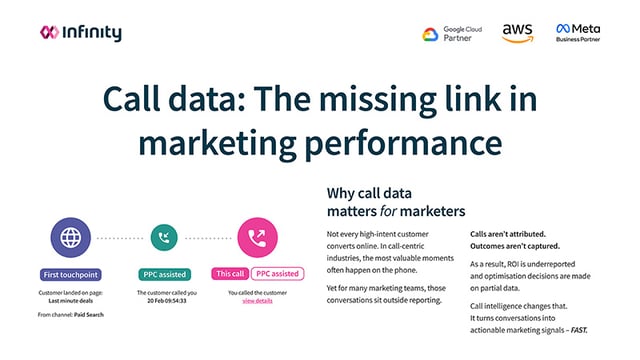
Learn why call data has become the missing link in modern marketing performance
What is B2B marketing attribution software?
Before we dive into the various types of models, what is marketing attribution and what is it used for? Marketing attribution involves creating a set of rules that enable you to understand which touchpoints in the customer journey have the greatest impact on conversion, by assigning value to each. B2B marketing attribution software helps marketers automate this process by collecting, analysing, and connecting customer journey data across channels, campaigns, and conversations.
B2B marketing attribution can be trickier than B2C. There are typically multiple decision-makers involved in B2B transactions and this can result in multiple touchpoints. For that reason, B2B businesses may prefer to use multi-touch models for attribution modelling, as opposed to simpler models such as first click and last click.
Why traditional B2B attribution models fall short
Many marketers are still optimising campaigns using incomplete conversion data. Traditional attribution models often focus heavily on online activity, while valuable offline conversations and phone calls remain disconnected from reporting and optimisation tools.
This creates major attribution gaps. Marketing teams can struggle to identify which campaigns are driving high-intent leads, which channels are producing revenue, and where budget is being wasted.
As privacy changes continue and third-party cookies become less reliable, first-party data is becoming increasingly important for accurate attribution and campaign optimisation.
How many types of attribution models are there?
Marketing attribution is important because no two customer journeys are the same. Marketers are running complex campaigns designed to reach customers across multiple touchpoints, which means that your customers are taking different paths to conversions. Using marketing attribution software enables teams to analyse these journeys more accurately and understand which touchpoints genuinely influence revenue outcomes.

Customer journey analytics: Why performance is plateauing
Learn how to stop revenue leakageThere are several types of marketing attribution models, including multi-channel models that can offer a more sophisticated overview of the customer journey. The most common attribution models for marketing are:
First click or lead creation – This model attributes 100% of the conversion to the first point the customer interacts with, otherwise known as the point of entry.
Last click or opportunity creation – This model attributes 100% of the conversion to the last point the customer interacted with before they converted into a sale.
Linear or equal-weighted – This model attributes the conversion equally to each of the touchpoints the customer interacted with during the acquisition process.
Positional or first and last click weighted – This model attributes the conversion across each of the touchpoints, but upweights toward the first and the last.
Which is the best B2B marketing attribution model?
With so many options, you might be wondering how do I choose the right B2B attribution model for my business? It’s important to remember that successful multi-channel marketing attribution relies on being able to see the full picture. That means understanding both online and offline interactions, including phone calls, conversations, and sales outcomes.
You need to have the right tools in place. With the right marketing attribution software in place, gathering the data you need is a piece of cake. Here are two things to bear in mind when selecting an attribution tool:
- How does it fit within your existing tech stack?
- Can it provide accurate multichannel attribution?
Choosing a tool that integrates with a variety of partners creates a streamlined flow of data, making it easier to extract insight without bringing in the data scientists. Providing accurate attribution is critical for business growth, as it gives you unique insight to attract customers and retain the ones you’ve already converted, without wasting time or budget.
The best B2B marketing attribution software should also help you activate data quickly. To improve campaign optimisation and help with your bidding platforms prioritising high-quality leads.
How AI is changing B2B marketing attribution
AI is transforming marketing attribution by helping teams move faster from insight to action. Instead of simply reporting on conversions, AI-powered attribution tools can now analyse customer conversations, identify intent, and surface the signals most likely to drive revenue.
Solutions like Smart Outcomes automatically categorise calls based on intent and outcome. Helping marketers feed richer first-party data into platforms like Google Ads and Microsoft Ads to improve optimisation and ROAS.
AI-powered conversation intelligence can also reveal conversion barriers, customer friction points, and missed opportunities that traditional analytics tools often miss.
What are the benefits of attribution models?
Using an attribution model to accurately track your marketing activity makes your decision-making more data driven. It also helps marketers improve campaign efficiency, increase attribution accuracy, and optimise spend based on real customer behaviour.
You can map out the full customer journey, online and offline, and gain a better understanding of the roles different stakeholders will play. This is particularly valuable for B2B marketers managing complex buying journeys with multiple touchpoints and long consideration periods.
With this knowledge at your fingertips, you can start to optimise your marketing campaigns and your budgets to ensure everything you do has a direct impact on your bottom-line. Better attribution also enables marketers to improve lead quality, reduce cost per lead (CPL), and prove marketing ROI with more confidence.
Here are just a few of the benefits of using attribution models:
It helps you identify your most impactful activity
Marketing campaigns often comprise of many elements - organic social, paid social, search advertising, dedicated landing pages. B2B marketing attribution software can help identify high-performing marketing activities and understand which ones are the most successful in driving both leads and conversations. This gives marketers clearer visibility into which campaigns are generating high-intent leads and revenue-driving conversations.
It pinpoints the moment of conversion
Not only can accurate revenue attribution help identify your most impactful marketing channels and activities, but it’s also primed to help you pinpoint the moment of conversion. This is critical for marketers looking to optimise customer journeys and improve conversion rates. Using the right tools, you can understand which channels, keywords, social ads or websites led to your customer picking up the phone, and making a purchase.
It streamlines the process of gathering data
Accurate revenue attribution pulls in multiple data sources to provide a holistic overview of the customer journey. It streamlines the process of gathering data across your core marketing channels and improves your ability to analyse it. By bringing it all into one central dashboard, whatever that might look like for your company. This empowers your marketing team to unearth insights faster, without needing a data science degree.
It can determine your wider strategy
Accurate marketing attribution enables your marketing and sales team to work in tandem, rather than in silos. It also helps align your wider strategy by sharing insight into the most impactful marketing campaigns. Preventing under- or over-valuing specific channels using data-driven insight.
How call tracking improves B2B marketing attribution
Phone calls are often one of the highest-intent conversion points in the B2B customer journey. Yet many businesses still fail to include them in their attribution models.
Call tracking software helps marketers connect calls back to the campaigns, keywords, ads, and channels that generated them. This closes attribution gaps and provides a much clearer view of marketing performance.
Combined with AI-powered conversation analytics, marketers can also understand why customers called, what stopped conversions, and which campaigns generated the highest-quality leads.
How can attribution improve B2B marketing campaigns?
We’ve reviewed the types of attribution models available to you and outlined the key benefits of implementing it effectively. But how exactly does attribution improve B2B marketing campaigns? And, what processes can you put in place to make it easier?
Getting started with marketing attribution involves three simple steps:
- Collect the data that matters to your business
- Combine your data sources in one place
- Visualise data in a way that enables you to extract relevant insights
It can be easy to forget that all of your digital marketing activity drives offline conversations as well as online. For many B2B businesses, phone calls represent some of the strongest buying intent signals in the entire customer journey. This creates attribution blind spots that can lead to underreporting ROI and wasting budget on low-quality traffic.
Call tracking can cover your blind spots by accurately connecting the customer journey to the call. Providing the insight you need to invest your budget in activity that works. It also enables marketers to feed richer first-party conversion signals into bidding platforms, helping improve optimisation and campaign performance.
Successful B2B attribution depends on you being able to see the full picture. That means combining online and offline data sources to understand what’s driving revenue, not just clicks or form fills.

Ultimate guide to paid media optimisation
Key takeaways
So, what have we learned about B2B marketing attribution software and the impact it could have on your B2B marketing campaigns? Here’s a recap:
Understand which marketing activities are successfully driving leads. Giving you everything you need to make informed decisions that will help your business grow.
B2B marketing attribution software reduces costs and boost your ROI by enabling you to be more targeted with your marketing spend and activities.
It streamlines the process of gathering data across marketing channels, and improves your ability to analyse it. This allows you to unearth insights faster.
Call tracking can connect online interactions with offline conversion, collecting precise customer data and filling gaps in the customer journey.
Every conversation matters. Start one with us to discover how AI-powered call tracking, Smart Outcomes, and conversation intelligence can help you optimise your most valuable customer conversations, and improve attribution accuracy across the full buyer journey.

Ready to unlock real audience insight at scale?
Discover how our call intelligence will help you
Book a demo
Related posts
Categories: All Digital Marketing Interviews Marketing News PPC

1 Jul 2026 in Digital Marketing
How To Use Marketing Attribution Software to Enhance your Multi-touch Attribution Reporting
Read more

4 Mar 2026 in Marketing Digital Marketing
Why your best leads don't convert (and how to fix it fast)
Read more
11 Feb 2026 in Marketing Digital Marketing
Call tracking software explained: ROI, support, and setup
Read more
29 Jan 2026 in News PPC Marketing Digital Marketing
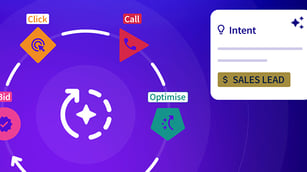
Smart Outcomes: Sector specific signals for PPC optimisation
Read more

1 Jan 2026 in PPC Marketing Digital Marketing
Get more value from your marketing data in the New Year
Read more

3 Dec 2025 in Digital Marketing
Proving ROI under budget cuts – why first-party call data is the missing link
Read more

19 Nov 2025 in Digital Marketing
Wasted budget – how poor lead quality increases CPL and drags down margins
Read more

16 Jul 2025 in Marketing Digital Marketing
Call tracking glossary 2025: Essential terms for marketers
Read more