Contents
If you’re asking yourself the question – what is call tracking – you’re in the right place. This blog dives into how it works, the different types of call tracking, and the benefits that come with it. From tracking calls from marketing campaigns to improving attribution, ROI, and campaign performance, you get the visibility you need to make smarter decisions.
What is call tracking and how does it work?
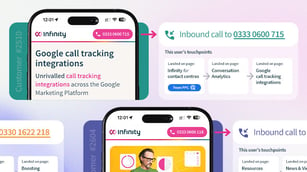
Call tracking is the process of monitoring, managing, and analysing incoming calls to your business. It uses unique phone numbers to track which marketing campaigns, channels, or sources are driving inbound calls. This means you have access to comprehensive customer journey analytics, from online activity through to offline conversions like phone calls.

Customer journey analytics: Why performance is plateauing
Learn how to stop revenue leakageBy tracking inbound and outbound sales calls, you'll see which marketing activities made your customers pick up the phone. In other words, call tracking joins the dots between online engagement and offline conversions, helping you improve marketing attribution.
You can do this manually by assigning distinct numbers to different sources and tracking their incoming calls. Alternatively, call tracking software offers a more precise, scalable, and advanced approach to monitoring call metrics. This means you can improve marketing performance at scale and with confidence.
Unlock smarter, data-driven growth from every customer conversation.
What is call tracking software?
An advanced cloud-based analytics platform integrates phone call tracking information with all website visitors' digital activity. This provides businesses with a comprehensive understanding of the customer journey, combining online behaviour with offline call data.
So, how does call tracking software work?
- A different phone number is assigned to each unique visitor on the website (known as dynamic call tracking).
- When a visitor calls the unique number, their user data is recorded. Then call tracking links the call to the visitors' digital activity, including source, campaign, and behaviour.
- This connection gives you a complete view of the caller’s journey. In other words, you can tell what they've been browsing, what products they're interested in, as well as which campaigns, channels, and keywords made them pick up the phone. Result? You have the insight you need to optimise campaigns and improve ROI.
Why is call tracking important for marketers?
Phone calls remain an important customer touchpoint. In fact, they’re often one of the highest-intent conversion actions in the customer journey. Plus, every customer conversation offers up a goldmine of intel that will help you better understand your audience.
When that's the case, it's a ton easier to create harder-hitting messaging and, ultimately, deliver better experiences that drive more conversions.
Explore the most important call tracking use cases for marketers
What’s interesting is that, according to BIA Kelsey, phone calls tend to generate 10-15x more revenue than web leads. Forrester also reports that 84% of marketers say phone calls have higher conversion rates with larger order value (AOV) compared to other forms of engagement, making them a critical driver of marketing ROI.
So, if you're not tracking phone calls, you could be missing out on key insights that'll help you optimise your marketing spend and convert more callers to customers.
What are the benefits of call tracking for marketing performance?
If your business receives inbound calls from marketing campaigns, tracking them is essential. That’s because you’ll gain full visibility of your customer journey, making it much easier to improve marketing attribution.
Here's an overview of the benefits of call tracking for marketing performance:
- Attribution and ROI measurement:
- Accurately track which marketing campaigns (online or offline) drive phone calls. This means you can eliminate attribution blind spots and nail ROI measurement. This helps eliminate attribution blind spots and improve return on ad spend (ROAS).
- Optimise marketing spend:
- Identify the most effective marketing channels and know where to allocate more budget to generate the highest returns while reducing cost per lead (CPL).
- Enhanced campaign performance:
- Measure the success of different marketing strategies and make data-driven decisions to enhance campaign performance based on real conversion data, not just clicks.
- Improved customer insights:
- Gain insights into customer behaviour and preferences by analysing call data, leading to more targeted and effective marketing efforts and improved lead quality.
- A/B testing:
- Run A/B tests on different marketing messages or channels to determine which ones drive the most calls and conversions.
.png?width=640&name=5-Ways-Marketers-Cheat-Sheet-Thumbnail%20(1).png)
Five practical ways to turn first-party call insights into stronger campaigns
Overall Benefits:
- Enhanced analytics:
- Gain comprehensive analytics on call activities, integrating with other data sources to provide a holistic view of marketing performance.
- Data-Driven Decision Making:
- Use call tracking data to make informed, data-driven decisions for optimised bidding and smarter marketing budget allocation
- Increased accountability:
- Hold teams accountable for their performance by tracking and analysing call data, leading to continuous improvement.
All in all, marketers who integrate call tracking into their MarTech stack will gain crucial insights that will massively improve the effectiveness of marketing efforts in the way of reduced CLP and better ROAS.

Improve ROAS in 30 days
3 practical steps marketers can take now
What are the different types of call tracking?
Some types of call tracking are more advanced than others, and the one you go for will depend on the level of marketing attribution you need.
Here’s a breakdown of the different types of call tracking you might want to consider:
Basic call tracking – Allocate one phone number to a source, typically one number per channel. This provides limited insights into campaign performance.
Campaign level – This is similar to the basic call tracking model, but more numbers are used and are assigned to each campaign you run for improved attribution accuracy.
Session level – A unique call tracking number is assigned to a user for the length of their browsing session to track individual interactions. While this can be useful, it doesn’t help you identify the full customer journey.
Visitor level – Capture all interactions with your site across all visits (including sources, keywords, and channels) that happen before a visitor picks up the phone. This is where you’ll get the most complete view of the customer journey and conversion path.
How to use fixed numbers for call tracking
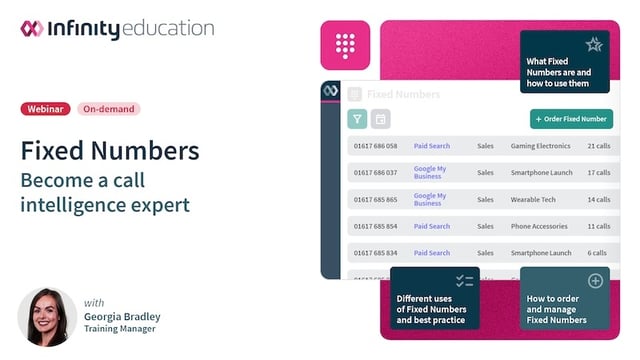
You can use fixed numbers in offline marketing campaigns such as radio ads, posters, business cards, stationery, billboards, catalogues and any piece of activity where a phone number can be featured but not connected to an online marketing journey.
Fixed numbers still provide usable data, but are not as comprehensive as dynamic call tracking numbers. While fixed numbers and offline call tracking can’t provide as much insight as dynamic numbers, they still have many call tracking benefits.
For example, it’s useful for seeing which other activities are generating calls and having that recorded in your call tracking analytics platform, which can help you be smarter with your marketing budget.
Fixed Numbers
Become a call intelligence expert
How are dynamic numbers used for call tracking?
Dynamic numbers are uniquely generated trackable telephone numbers specifically for each website visitor to enable accurate tracking of marketing performance and customer journeys.
Each trackable phone number will then provide data on individual customer journeys, and which source, ranging from PPC, SEO and more, the customer originated from. As a result, this means marketers can accurately track calls from ads and optimise campaigns effectively.
Visitor-level call tracking requires a pool of tracking numbers that you can allocate to each website visitor. Tracking pools are dedicated to each website and client, so it's easy to connect all calls to the right place.
Why consider call tracking?
Call tracking helps you see which marketing activities are genuinely driving customers to pick up the phone. When that’s the case, you can make smarter decisions about where to spend budget and what’s actually delivering results.
When you’ve got a clearer view of the customer journey, it becomes much easier to spot what’s working, cut wasted spend, and focus more budget on the campaigns driving the best quality leads. Result? Lower cost per lead (CPL), stronger return on ad spend (ROAS), and a much clearer picture of marketing ROI.
On top of that, the insight gathered from customer conversations can help improve sales conversations, tighten up customer experience, and uncover the sticking points that stop good leads from converting. In short, call tracking gives teams the data they need to make better decisions and improve performance across marketing, sales, and customer service.
Customer testimonials
Find out what marketers think about Infinity
Keen to find out more and start making more good calls? Start a conversation with us today to find out how to get instant value from your call data.

Ready to unlock real audience insight at scale?
Discover how our call intelligence will help you
Book a demo
Related posts
Categories: All Digital Marketing Interviews Marketing News PPC