



Five jobs, on the same conversation data
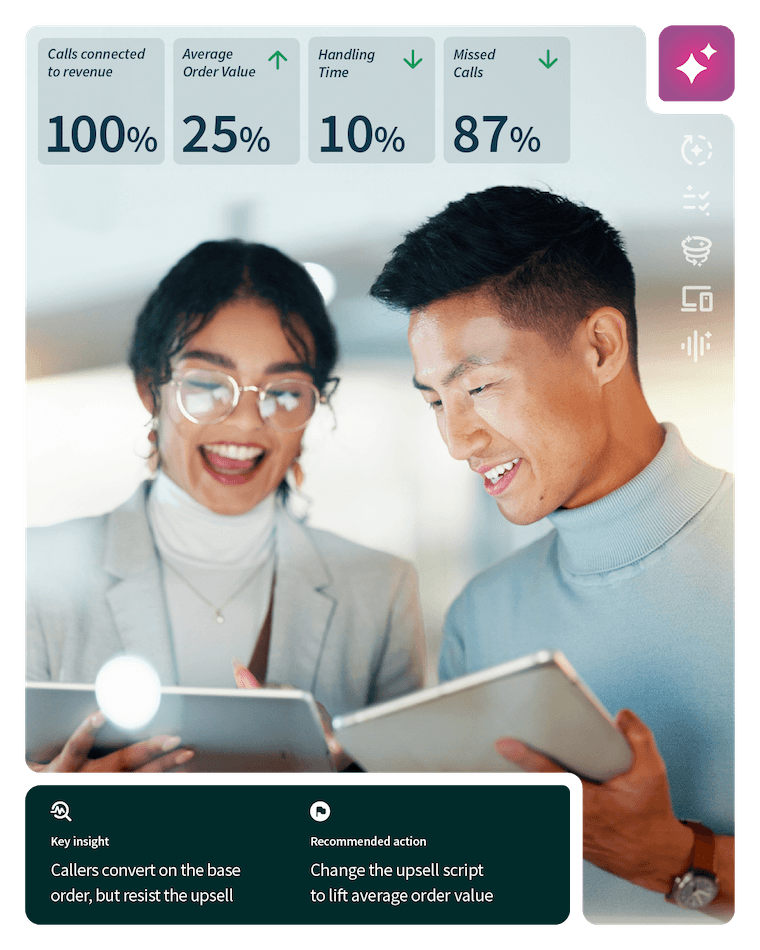
Infinity applies AI to the customer conversations Call Tracking has already captured and attributed. There are five things it does with them.
Reads and classifies every conversation
Smart Outcomes identifies buying intent and conversation outcomes automatically, so a quote request, a booked appointment or a qualified opportunity is distinguishable from a service query or a wrong number.
Those classifications become the conversion signals your advertising platforms optimize towards, replacing "every call" with "the calls that matter". This is the work that would otherwise mean listening to every call.
Connects conversations to revenue
Smart Match links inbound calls to the leads, sales and revenue they produced, so you can see which campaigns, channels and keywords create commercial value rather than call volume.
That revenue figure is what makes value-based bidding possible, and what lets you defend a budget in the language Finance already uses.
Finds what is stopping demand converting
Conversion Barriers, part of Smart Outcomes, identifies the objections, information gaps and journey problems that recur across conversations — the reasons high-intent inquiries do not become customers.
Where the rest of the analysis tells you which conversations were valuable, this tells you which ones should have been and were not.
Puts marketing context in front of your team
Caller Insight shows the campaign, keyword and on-site journey behind a call before it is answered, so the person picking up already knows what the customer was looking at.
Marketing spends heavily to create that conversation. This is what stops it starting cold.
Caller Insight is the call-handler capability within Smart Agent.
Answers the calls you cannot
Smart Voice uses Voice AI to engage callers nobody could answer, qualify what they wanted and progress the opportunity, rather than leaving demand you already paid for in a voicemail box.
The recovered revenue is attributed back to the campaign that created the call.
AI is only as good as the data underneath it
Most marketing AI works on behavioral data: clicks, sessions, pages, form fills. Useful, but all of it is inference. A click is a guess at what someone wanted.
A conversation is not a guess.
It is the customer telling you, in their own words, what they were trying to do and what stopped them.
It is first-party and unprompted.
Nobody tells a survey what they really think. They tell the person on the phone, without being asked and without knowing it is being analyzed for insight.
It covers the part of the journey nothing else sees.
After the click, before the sale. For businesses where the valuable conversion happens on a call, that is where the decision is actually made.
It carries reasoning, not just behaviour.
Analytics can show you that a page underperforms. A conversation can tell you the price was unclear, the stock was wrong, or a competitor had already quoted lower.
It is yours.
Your own customers, your own conversations, in your own account. Not modelled, not inferred from a third party.
Analytics tells you what happened. Conversations tell you why.
Where the AI sits in the Infinity Loop
Capture is the foundation. Intelligence is what you build on it.
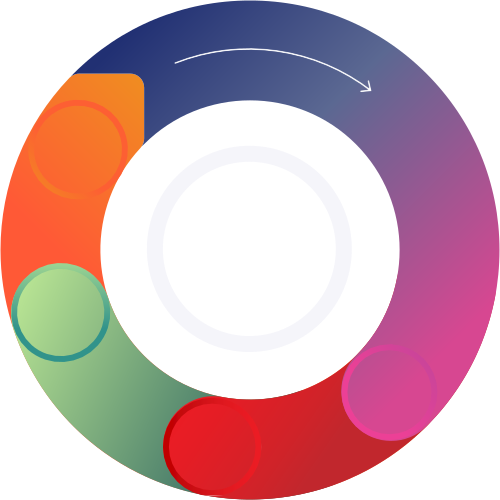
What is the Infinity loop?
Marketing is a continuous cycle of measuring, learning, and improving.
But most optimization decisions are made using incomplete signals, because customer conversations never make it into the process.
Infinity closes that gap by transforming first-party conversation data into AI-driven signals that reveal what's happening, what's blocking conversion, and where to act next.
Every signal makes your loop smarter – helping you improve performance, reduce waste, and grow revenue faster.
Call Tracking is not the old part of this. It is the part everything else depends on.
Someone still has to decide what to fix first
Automated classification is good at scale and speed. It is less good at judgement — which of six findings will move performance most, and in what order.
Infinity’s Insights & Intelligence team does that work with you. A Rapid Insights Project puts them on one specific question with a fixed scope and a fixed price. Professional Services keeps them across your performance continuously.
That combination is the point. AI does the reading. People do the prioritising.

Intelligence that stays in Infinity changes nothing
A signal only earns its keep once it reaches the system making the decision.
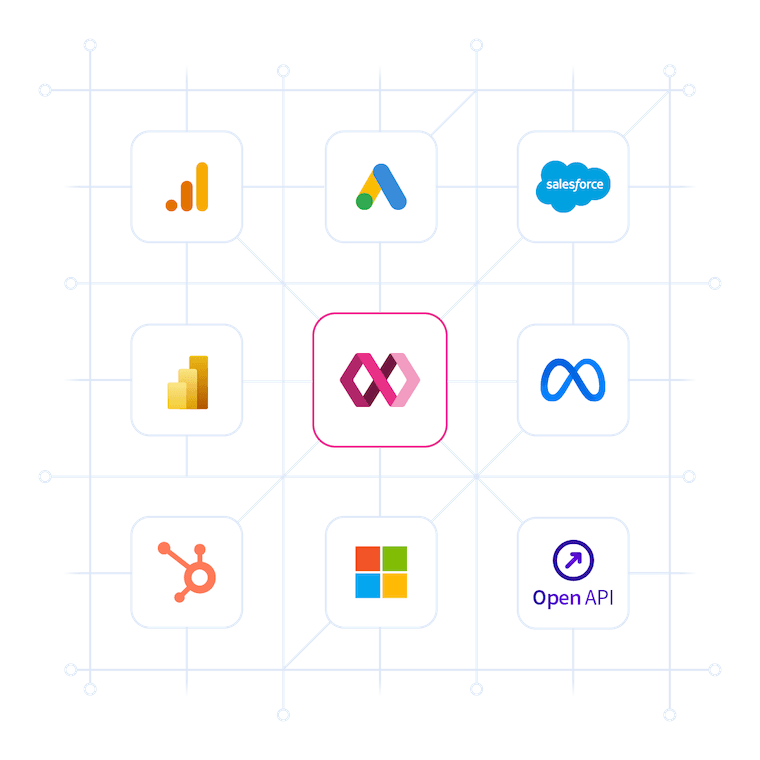
Conversion events and revenue values go into Google Ads, Microsoft Advertising and Meta. Call context and outcomes go into Salesforce and HubSpot. Complete performance goes into GA4, Looker and Power BI. Anything else goes through the open API.
Infinity does not replace your marketing stack. It gives the tools you already use the signals they need to perform better.
What better signals produce

Using Smart Outcomes to optimize paid media on call outcome data:

Using Smart Match to connect call revenue to campaign optimization:

Using Call Tracking with Smart Outcomes, with 100% of calls matched to marketing activity:

Using Conversation Analytics with ongoing analysis from the Insights & Intelligence team:
See what your conversations have been telling you
Bring one month of your call data and we will show you what the AI finds in it: which conversations were worth having, what they were worth, and where the demand you already paid for is going missing.
Better signals
Higher-value demand
Recovered revenue
Proof for Finance
AI call analytics FAQs
What the AI does
AI call analytics is the use of artificial intelligence to analyse recorded customer phone conversations and turn them into structured data marketers can act on — identifying what the caller wanted, what the conversation produced, and what it was worth commercially.
It differs from call tracking, which attributes a call to the marketing that generated it but does not interpret what was said. Attribution tells you where a call came from. AI analysis tells you whether it was worth having.
Infinity’s AI performs five jobs on captured customer conversations: it classifies intent and outcomes, connects conversations to revenue, identifies recurring barriers to conversion, surfaces marketing context for call handlers, and engages callers who could not be answered.
Those capabilities are delivered through Smart Outcomes, Smart Match, Conversion Barriers, Caller Insight and Smart Voice respectively.
What it does not do is make marketing decisions. It produces the signals; the marketer and their platforms decide what to act on.
Most conversation intelligence tools are built to analyze conversations. Infinity is built to change what happens next, which means the output is designed to leave the platform.
The practical difference is where the value lands. Analysis produces a dashboard and a set of themes. Infinity produces conversion events that go into a bid strategy, revenue values that enable value-based bidding, context that appears on a call handler’s screen, and a conversation with a caller nobody answered.
Both are useful. A tool that only reports leaves the decision exactly where it was.
Smart Outcomes tells you what a conversation meant. Smart Match tells you what it was worth.
Smart Outcomes works from the conversation itself, identifying intent and outcome — a quote requested, an appointment booked, a service query. Smart Match works from your sales data, connecting a call to the revenue it eventually produced.
Outcome signals arrive quickly and are useful while a campaign is still running. Revenue signals arrive later and are what prove commercial return. Most teams need both, for different reasons.
No. Each solves a different problem and each works independently, so most customers start with the one addressing their most expensive problem.
Teams wasting ad spend usually start with Smart Outcomes. Teams who cannot prove marketing’s revenue contribution start with Smart Match. Teams losing demand at the point of contact start with Caller Insight or Smart Voice.
They compound when combined, which is a reason to sequence them rather than buy everything at once.
Call Tracking. Every AI capability works on conversations that have already been captured and attributed, so Call Tracking is the prerequisite.
Beyond that, Smart Match benefits from a sales file or connected CRM, because it needs somewhere to read revenue from.
Getting value
Call Tracking can be live in week one, and outcome signals typically begin improving optimization within the first month, once there are enough conversations to classify.
Revenue signals through Smart Match take longer, because they depend on your own sales cycle — the call has to become a sale before there is a value to attach.
No, but judgement is still required somewhere. The AI classifies conversations at scale; deciding which finding to act on first is a different task.
Teams with capacity do that themselves. Teams without it use Infinity’s Insights & Intelligence team, either for a fixed-scope Rapid Insights Project answering one question, or through Professional Services on an ongoing basis.