From blind spots to better decisions
Key takeaways

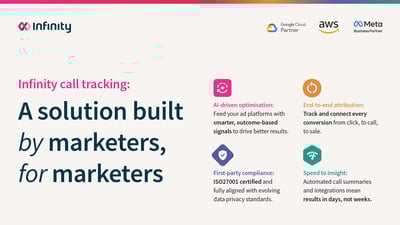
Call tracking turns conversations into measurable outcomes. By connecting phone calls to campaigns, channels, and keywords, marketers gain a complete view of what’s driving pipeline and revenue - not just clicks and form fills.

Accurate call attribution protects budget and strengthens ROMI. When call-driven conversions are visible, ROI is easier to prove. That makes it easier to defend spend, prioritise high-performing activity, and invest with confidence.

First-party call data powers smarter optimisation and decisions. Call insights reveal intent, objections, and friction points that digital metrics miss. This enables better media optimisation, higher conversion rates, and more informed strategic planning.
Get your guide
Related eBooks
1 Dec 2025 | 11 min read
The smart marketer's guide to evaluating call intelligence solutions
Evaluating call intelligence solutions? Learn how to spot the difference between a solution that’s “good enough” and one that’s “growth-ready” with this handy guide.
Read more